Your Humanity Will Be Your Superpower
Last year, I served on the jury of a violin-making competition overseas. The standard was high, and the work was often beautiful—sometimes even technically flawless. After the ceremony, I stepped off the stage and began asking a few simple questions: Why do you love doing this? What draws you to music, or to making, or to creating at all? Despite the level of skill on display, many people struggled to answer. But there were others who didn’t hesitate. When they spoke, their faces changed. They talked about music from childhood, about moments that stayed with them, about the feeling of seeing someone else moved by something they had helped bring into the world. It was immediately clear that those were the people who would last.
So I’ll ask you the same question, not rhetorically but seriously: why do you do what you do?
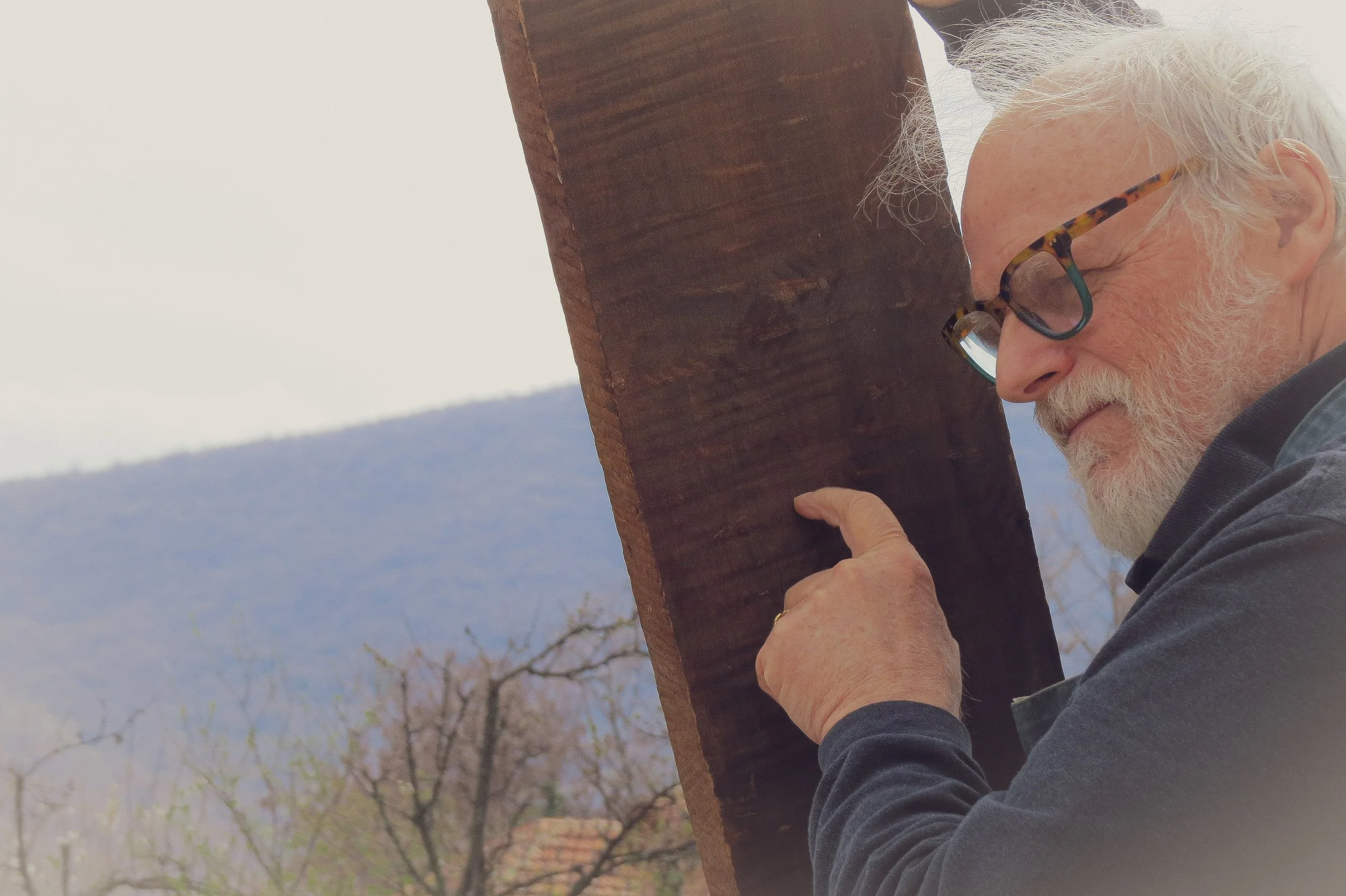
Gregg Alf - picture taken by Michael Edgeworth
Because this—whether we’re talking about making, playing, or simply listening—is not just about skill. It’s about a way of being. It’s about how you move through your life. The way you cook your food, the way you listen to music or sit in silence, the way you care for your tools or for the people around you—these things are not separate from your work. They find their way into it, and they shape how you experience what others create as well.
I’ve seen this over and over again. A life lived with attention, humour, gratitude, and depth produces something different. The details carry more weight. They feel more alive. There is something present in them that can’t quite be explained, but is immediately felt.
None of this is especially new. The idea that humanity, presence, and sensitivity matter has always been at the centre of meaningful work. But now, something is changing the context in a profound way. A new force is entering our lives—one that is going to reshape not just how we work, but what we value in the work itself. I’m talking, of course, about artificial intelligence.
This is not just another tool. It’s not like switching from one method to another. It’s more like electricity—something that quietly but completely transforms what’s possible. And the real risk is not that it replaces us. The risk is that it flattens us. That it removes the warmth, the strangeness, the intimacy—the human fingerprint—from what we create and even from how we receive it.
We’re already beginning to feel this. We encounter work that is polished, convincing, even beautiful, but somehow difficult to distinguish from everything else. It’s good—very good—but it feels anonymous. Interchangeable.
We’ve always known, at some level, that personal expression matters. But in this moment, it becomes essential. Because in a world where machines can imitate creativity, personal work becomes the only work that truly resonates. Artificial intelligence can generate music, images, and ideas with remarkable speed and fluency, but it cannot care about a single phrase, or sit with a sound until it feels right, or wonder whether something meaningful happened in the process. That space—between effort, attention, and meaning—still belongs to us.
As technology advances, even variation and imperfection can be simulated. So the question becomes: what remains? What remains is everything that cannot be faked—your life, your experiences, your attention, your story. In that world, being correct or precise will not be enough. Even attempts at creativity that are not grounded in something real will begin to feel hollow. The work, and the way we engage with it, has to become something deeper.
It has to be honest, candid, vulnerable, and sometimes surprising. It has to be personal—every time.
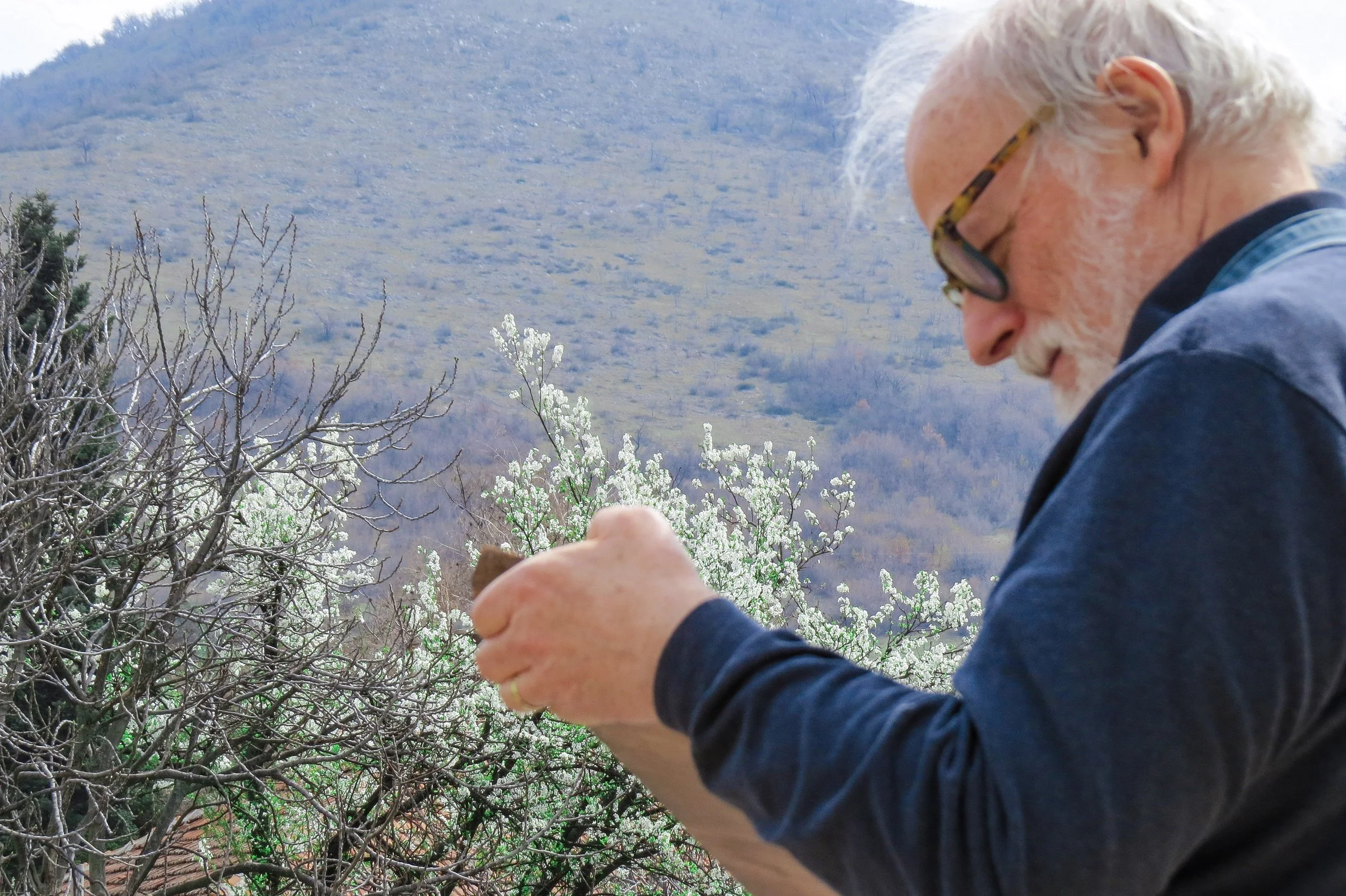
Gregg Alf, photographed by Michael Edgeworth, with the Rhodope Mountains in the background.
Our role is no longer to compete with machines by being faster or more perfect. It is to become more fully human in what we create, and in how we listen, respond, and connect. That doesn’t mean abandoning craft. Skill still matters, deeply. But it becomes a tool in service of something larger, not the end in itself.
You don’t learn to create something meaningful by mastering rules alone. You do it by living. By reading poetry, by falling deeper in love, by learning to do something simple perfectly, by sitting with people in silence, by traveling, by forgiving someone. By engaging with music, or with any form of art, as if it were a personal conversation rather than a performance to be evaluated.
Because when the machines come—and they’re already here—your humanity will be your superpower.
So I’ll ask one last time: why do you do what you do?
That answer is yours to discover. And when you find it, it has the power to shape everything you touch—and everything you hear. If it does, your connection to the work will last.